
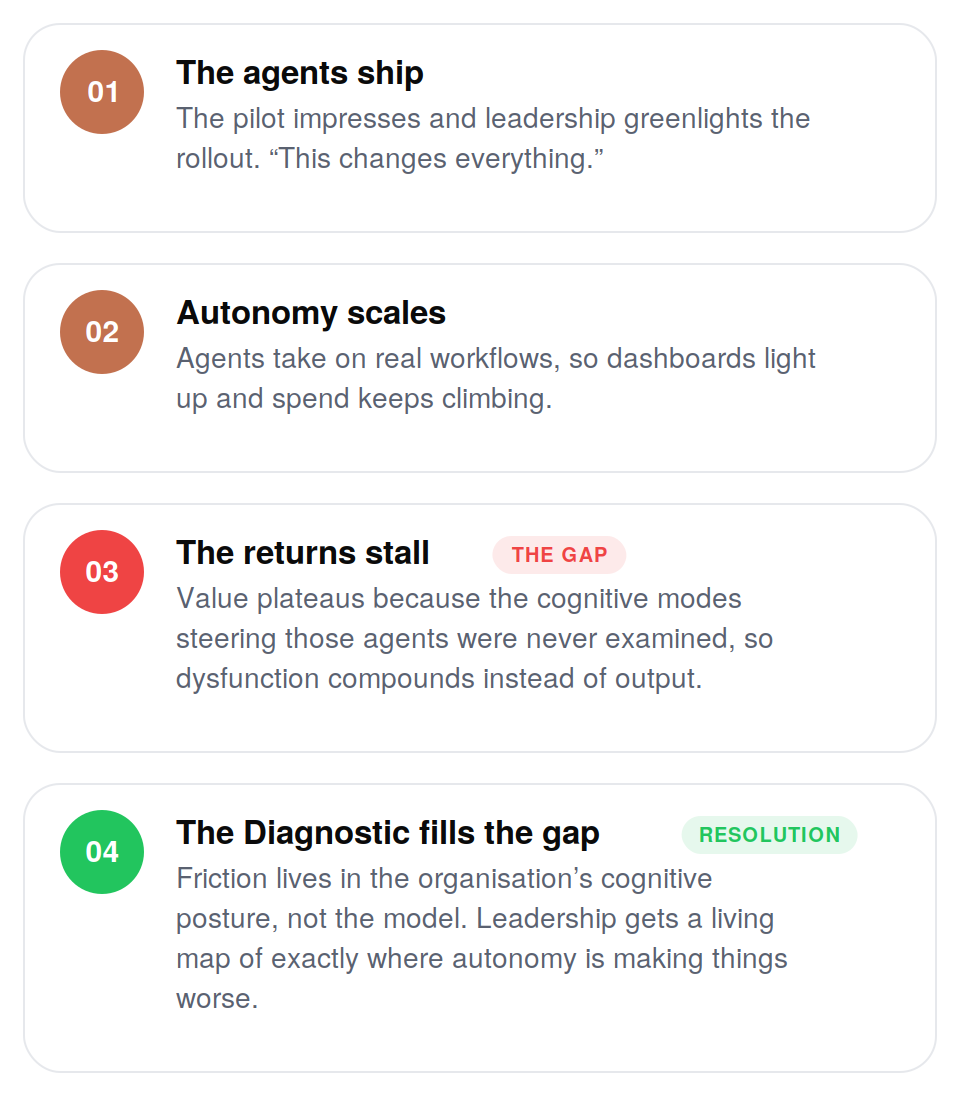
Every AI agent rollout follows the same arc: impressive pilots with glowing dashboards, followed by returns that never compound.
The gap is cognitive because an agent inherits the mindset of the people who direct it, so the avoidance, blind trust, and over-reliance that used to limit assistive AI now operate at machine speed and scale.
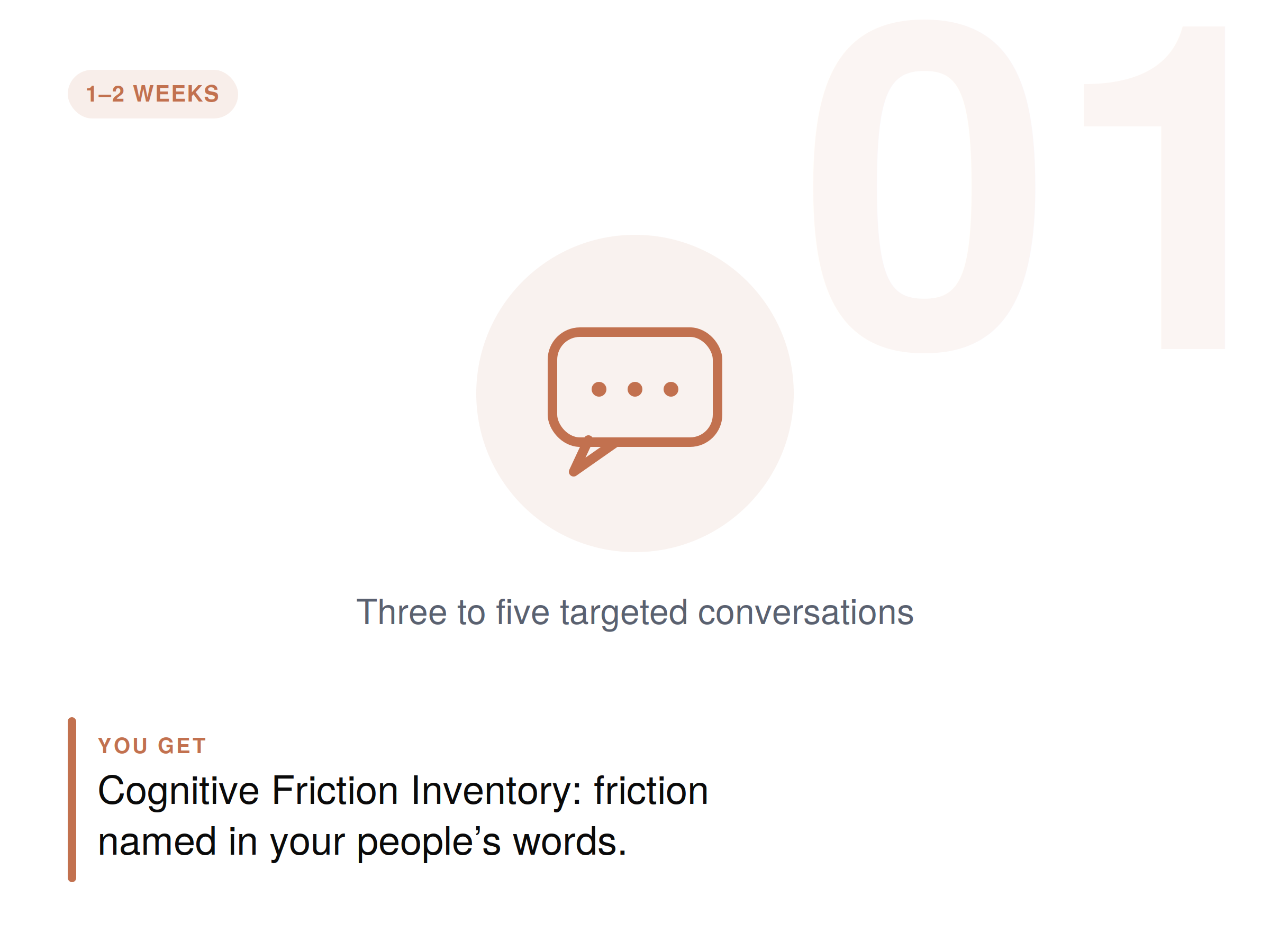
3–5 targeted conversations, scaffolded on the Egg Theory and Cognitive Ergonomics.
You leave with a Cognitive Friction Inventory
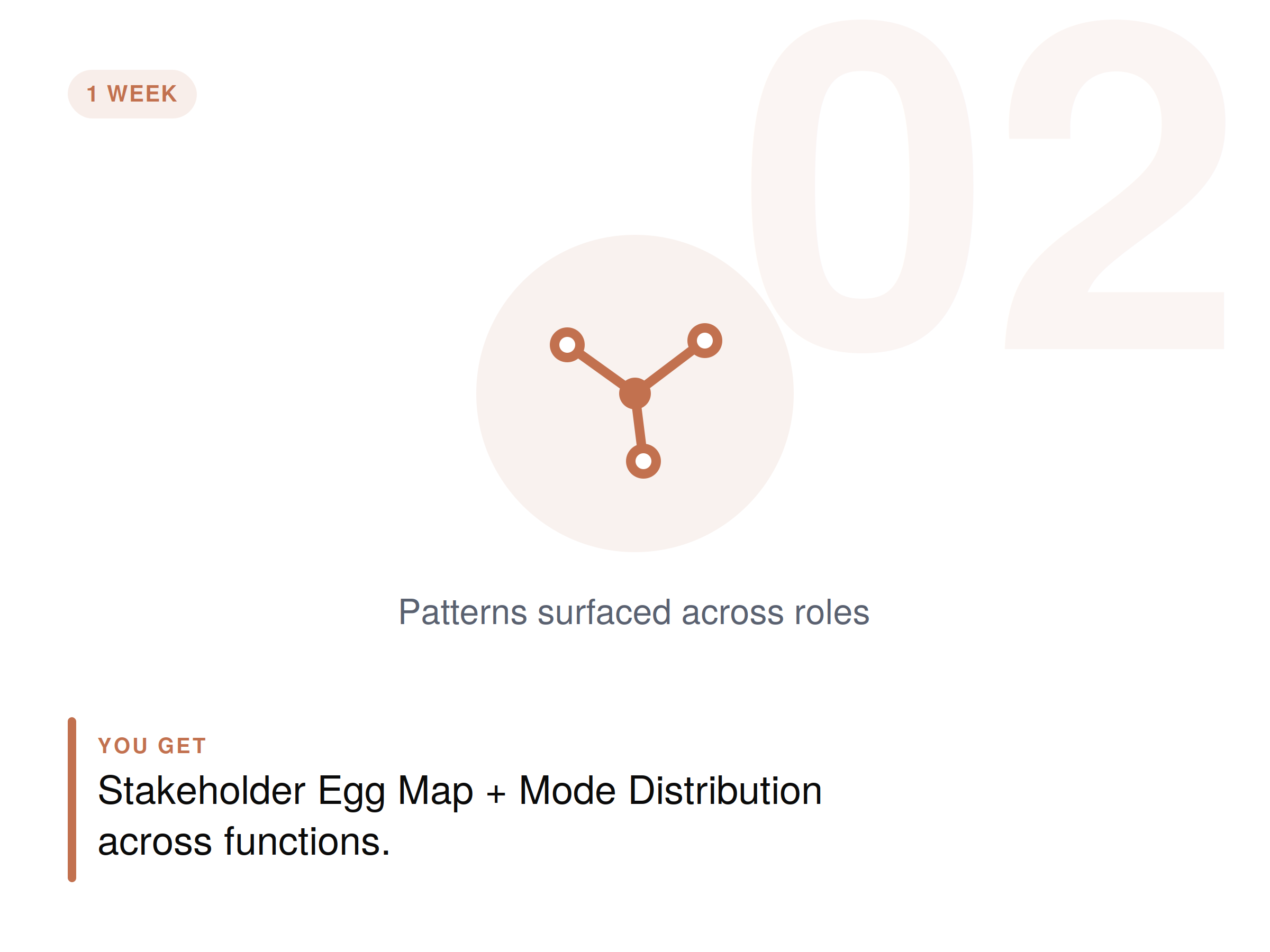
Discovery loaded into a private project, highlighting patterns surfaced across roles as a Stakeholder Map and Mode Distribution
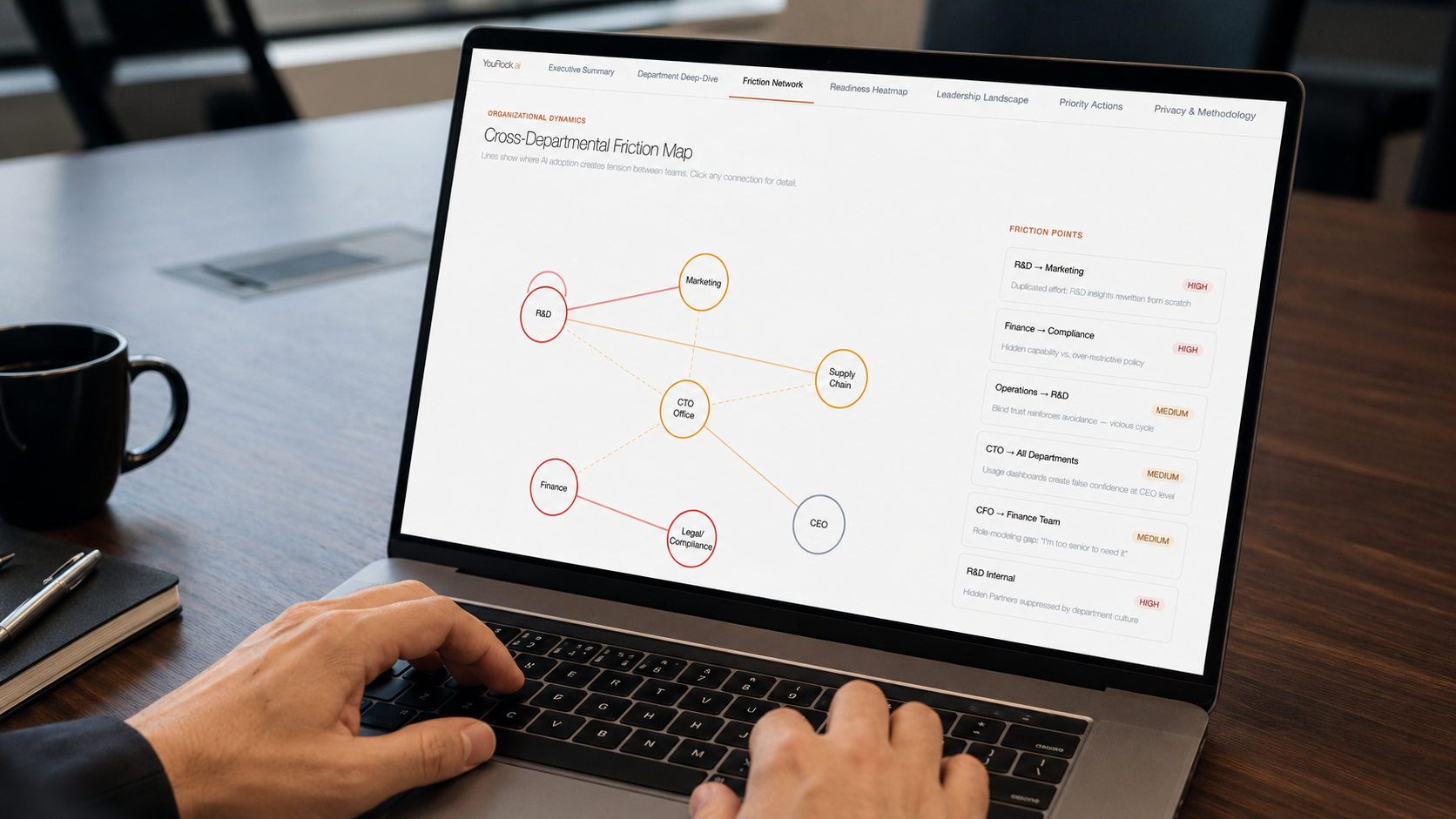
Your data rendered into an interactive dashboard with seven tabs and yours to keep
(optional) An advisor embedded on your findings, answering questions long after the engagement ends
We're not sure we're asking the right question yet
This is where most leaders first meet the thinking, through a keynote, the Fresh Eggs newsletter, or the book.
It reframes the question most organisations get wrong: how your people think alongside machines, and where that breaks down, not which tools to buy.
You come away with a shared language for the problem and a sharper sense of what to watch for, the groundwork the later steps build on.
With nothing deployed and nothing spent, this is the lens that makes everything after it legible.
Show us why our agents aren't paying off
The core engagement: over three to five weeks, a single lead observer runs a five-layer read of how your organisation works with its agents, where avoidance, blind trust, and over-reliance get inherited by the systems deployed and scaled into lost return.
The results come back as an interactive dashboard your leadership keeps and returns to: where the friction sits, which functions it crosses, and what to act on first.
Organisational, not individual; GDPR-safe, with no personal data. You finish knowing exactly why the value stalled and where it's recoverable.
Build the capability, and keep using it
What turns a diagnosis into change: targeted workshops and coaching work directly on the specific cognitive habits holding your teams back, and the friction the Diagnostic surfaced, not the generic AI curriculum.
Alongside it, an advisor stays embedded on the engagement's data and frameworks, answering the questions that keep coming up long after the sessions end.
Capability builds and stays, so the gains compound instead of fading when the engagement closes.